
For years, the internet worked like a giant library.
You searched for something, browsed multiple pages, compared ideas, clicked links, explored rabbit holes, and slowly formed an opinion.
That internet is quietly disappearing.
Today, the internet is increasingly behaving like an answer machine — not a place for discovery, exploration, or curiosity, but a system designed to deliver one clear, immediate response and move on.
This shift isn’t subtle. It’s structural. And it’s already changing how people search, read, learn, and make decisions online.
If you create content, run a website, build products, or work in marketing, this change matters more than you think.

From Exploration to Expectation
Let’s start with a simple observation.
When someone searches today, they don’t expect:
A list of 10 blue links
A long blog explaining context first
Multiple opinions to compare
They expect:
A direct answer
A summary
A clear next step
Search behavior has evolved from “Help me explore” to “Just tell me.”
This expectation didn’t come from nowhere. It’s been shaped by years of:
Google featured snippets
Voice search
Autocomplete
Knowledge panels
AI chat interfaces
“People also ask” boxes
AI didn’t start this trend — it accelerated it.
Why Discovery Is Declining
Discovery requires effort.
It requires:
Clicking
Reading
Comparing
Thinking
But the modern internet is optimized for speed and convenience, not effort.
Here’s what’s happening under the hood:
1. AI Compresses Information
AI systems summarize content into:
One paragraph
A few bullet points
A direct response
This removes friction — but it also removes nuance.
Instead of learning around a topic, users consume a compressed version of reality.
2. Zero-Click Search Is Becoming Normal
A large percentage of searches now end without a click.
Users get:
Definitions
Steps
Comparisons
Recommendations
…directly on the search results page or inside an AI interface.
The result?
Websites are no longer destinations — they’re data sources.
3. Platforms Reward Answers, Not Exploration
Algorithms increasingly favor content that:
Gets to the point fast
Can be quoted
Can be summarized
Looks authoritative at a glance
Content designed for exploration — essays, long narratives, layered arguments — often loses visibility.

The New Role of Content on the Internet
This is the uncomfortable truth:
Content is no longer primarily written for humans to explore — it’s written for systems to interpret.
AI, search engines, and aggregators act as intermediaries between creators and users.
That doesn’t mean long-form or thoughtful content is dead.
It means its purpose has changed.
How People Actually Consume Information Now
Let’s look at modern user behavior:
They skim before they read
They jump to conclusions quickly
They trust summaries more than sources
They want reassurance, not research
They value clarity over creativity
In many cases, users don’t want the best answer.
They want a good enough answer, fast.
This is exactly what answer-driven systems are designed to provide.

What This Means for Websites & Blogs
If the internet is becoming an answer machine, then most websites are facing an identity crisis.
Traditional Website Assumptions (That No Longer Hold)
“More traffic = more success”
“Longer content automatically performs better”
“Users will explore related pages”
“SEO means ranking #1”
These assumptions break down in an answer-first internet.
New Reality
Visibility matters more than clicks
Being cited matters more than being visited
Trust matters more than traffic
Clarity matters more than cleverness
Your content might be read without being visited.
That’s not failure — it’s the new distribution model.

Discovery Isn’t Dead — It’s Just Selective
Important distinction:
Discovery hasn’t disappeared. It’s become intentional.
People still explore when:
Making high-stakes decisions
Learning a new skill deeply
Comparing tools or strategies
Seeking opinions or experiences
But casual browsing is shrinking.
This means:
Fewer pages get explored deeply
Fewer creators get attention
Fewer sites get “loyal” readers
Only content that earns depth gets exploration.
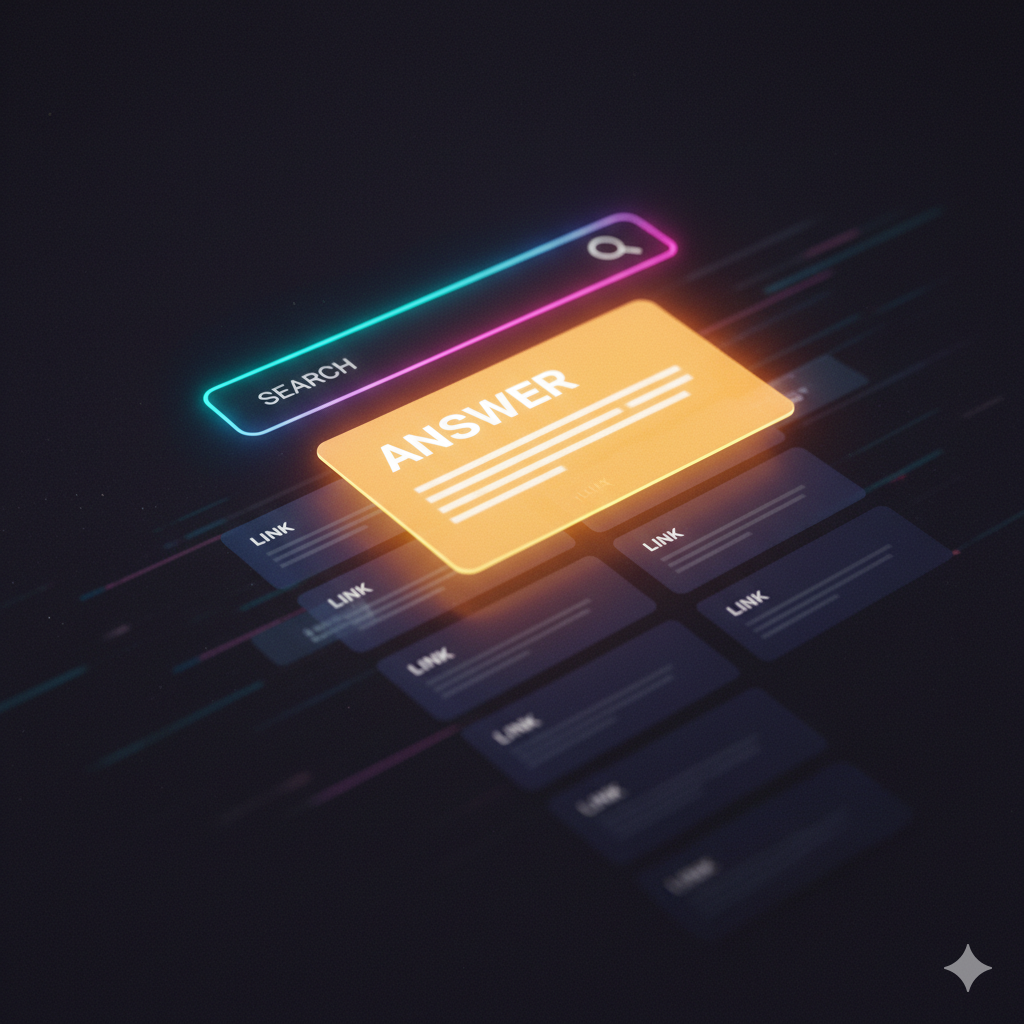
The Rise of “Answer-First Content”
To survive and grow in this environment, content must adapt.
Answer-first content:
Starts with clarity
Removes unnecessary buildup
Prioritizes usefulness
Respects time
This doesn’t mean dumbing things down.
It means earning attention before asking for it.
What Smart Brands Are Doing Differently
Brands that are adapting well aren’t fighting the answer machine — they’re working with it.
They:
Provide clear definitions upfront
Use structured formats
Answer questions directly
Expand after clarity
Build trust through consistency
They understand that being useful beats being clever.

Where Humans Still Matter
Here’s the good news.
AI is excellent at:
Summarizing
Extracting
Rewriting
Aggregating
But it struggles with:
Lived experience
Judgment
Trade-offs
Context
Nuance
This is where human-led content still wins.
The most valuable content today isn’t just informative — it’s experienced.

The Future: Fewer Pages, Stronger Voices
As the internet becomes more answer-driven, two things will happen:
Average content will disappear
Strong perspectives will stand out
There will be:
Fewer clicks
Fewer explorations
Fewer casual readers
But also:
More trust
More authority
More impact per piece of content
This favors creators and brands that:
Know their domain deeply
Speak clearly
Don’t chase algorithms blindly
Build long-term credibility

What This Means for AlineCRM (and Brands Like It)
For product-led, tool-focused, or SaaS brands, this shift is an opportunity.
Instead of trying to:
Rank for everything
Chase traffic volume
Produce endless content
The smarter move is to:
Own specific topics
Answer real questions clearly
Build trust through consistency
Create content that AI and humans respect
When your content becomes the source, not just the destination, you win in an answer-first internet.

Final Thought
The internet isn’t becoming worse.
It’s becoming different.
Discovery hasn’t vanished — it’s just no longer guaranteed.
In an answer-machine world:
Attention is earned faster
Authority matters more
Clarity beats complexity
The brands and creators who understand this shift won’t just survive — they’ll define how the next version of the internet feels.