
If you’d said back in 2022 that marketers by 2025 would struggle less with clicks – more with catching AI’s eye before even reaching people – they’d have stared blankly. But now it’s real: search keeps shifting, material must think harder to succeed, while solid content demands way more than it used to.
In a nutshell: SEO’s still alive. It’s changing shape though. What about content strategy? Skipping it’s no longer possible – now it powers every marketing setup built to grow.
In this update, I’m diving into the top SEO and content shifts coming in 2025 – what they actually mean for folks like you (yep, we’re talking to you: tech-savvy marketers, DIY builders, or workflow nerds), plus ways to keep your edge.
1. Search is shifting — from keywords to answers
Why it matters
Traditional SEO revolved around keywords, backlinks, and page titles. In 2025 the game has shifted: search engines are increasingly giving answers instead of just links. Platforms like the ChatGPT-powered “AI Overview” boxes, or generative results in Google Search, are reshaping click behaviour.
That means your content needs to be formatted and optimised for both human reading and machine extraction. Search intent is no longer just “what is X?” — it’s “give me an answer, now.”
How to adapt
Write clear, structured content with headings that reflect user questions (e.g., “What is topic cluster strategy?”, “How do I build content workflows for AI search?”)
Use schema markup (FAQ, HowTo, list) so you increase your chances of being picked up as an answer.
Think beyond Google: optimise for alternative search channels (AI assistants, voice, chatbots).
2. Content clusters, topic authority & system-thinking
Why it matters
The days of publishing random blog posts and hoping for traffic are over. Search engines reward topical authority — meaning you show up frequently and thoroughly across a subject. One way to do this is through content clusters: a pillar page + supporting articles, all interlinked deeply.
At the same time, content strategy must be viewed as systemic (tools, workflows, automation) rather than ad-hoc.
How to adapt
Build a pillar article (e.g., “Complete Guide to SEO & Content Strategy 2025”) then publish cluster articles on sub-topics (e.g., “How to build topic clusters with no-code tools”, “AI-powered keyword research for your workflow”).
Link within the cluster intelligently: pillar → related articles → pillar. This helps both users and search engines.
Treat your content as part of your tech stack: integrate your blog calendar with your MarTech tools (AppSheet, automation platforms) to manage topic ideation, publishing, tracking.
3. AI, No-Code & Workflow Automation for Content
Why it matters
If you’re currently crafting CRMs, setting up workflows, or designing dashboards – this space fits you perfectly. Not anymore just hype for online influencers; AI now drives the full cycle from brainstorming to posting and tracking results
Here’s what really matters though: leaning on AI just to crank out extra posts won’t cut it. What actually works? Baking these tools right into how you build content – start with brainstorming, then draft, fine-tune, reshare, track results.
How to adapt
- Create workflows – like start with keyword research, pass it to an AI tool for a draft outline, have someone tweak it by hand, put it live while auto-adding internal links, then set a reminder to revisit the post half a year later.
- Try out no-code tools – say, something you already know well – to create live reports that show how your posts are doing, like visits, time spent on page, links clicked, or sales made.
- Play around with AI to spark ideas or find starting points – yet toss in your own twist plus real-life know-how; that’s what makes stuff stand out now.
4. UX, E-E-A-T & Human trust signals
Why it matters
In 2025, search engines care more about real experience, deep knowledge, solid authority, but also trust – E-E-A-T in short.
Here’s the twist today: it’s all about hands-on know-how – stuff you’ve actually done, real situations you’ve tackled, lessons learned on the job. Which fits right into your wheelhouse – think marketing tech, CRM setups, working without code.
If your goal’s real progress, solid content won’t cut it – needs a fresh angle, stuff you won’t bump into anywhere else.
How to adapt
- Share real examples from your experience, toss in actual numbers or step-by-step processes – skip copying the usual advice everyone repeats.
- Share a short background showing your expertise, include links to past projects or real examples that prove what you can do.
- Keep the design neat – loads quick, works great on phones, eye-catching images, easy-to-spot titles, plus smooth menu flow.
- Update old posts now – keeping things current makes a difference.

5. Update, reuse – mix into different formats
Why it matters
Content doesn’t just blow up then disappear. By 2025, smart moves mean reworking old stuff, giving it a quick update, or sending it out in different shapes – like turning blogs into clips, podcasts, or bite-sized reels. Source: Search Engine Land
Folks are using voice or chat bots more these days instead of typing into a browser – format tweaks make a real difference.
How to adapt
- Any blog could turn into a video outline, short clip for socials, or snippet in a newsletter.
- Set up routine check-ins – swap out stats, tweak links, replace images every half to full year.
- Check your stats to spot which posts still pull traffic versus ones dropping off – then update the fading hits to boost them again.
6. Alternative search engines, voice & generative channels
Why it matters
Google’s still on top, yet this year adds new twists – like voice helpers, bots that talk back, smarter search tools, or different options entirely.
This changes how you plan posts – think about the way folks talk when they search, like speaking out loud or asking questions. Also keep in mind that searches happen beyond just one search engine, so spread focus around.
How to adapt
- Fix your setup so it handles everyday questions like “how do I create a no-code content process?” instead of only short keyword phrases.
- Add schema markup to help voice search plus support chatbots – try FAQ or HowTo formats.
- Track what’s on YouTube, also check Instagram, throw in forum chats too.
- Keep an eye on stats that go past just visits – like how often your site shows up in searches, or when tools like AI mention your stuff, if you’re able to track it.

7. Conversion, deeper engagement & real business outcomes
Why it matters
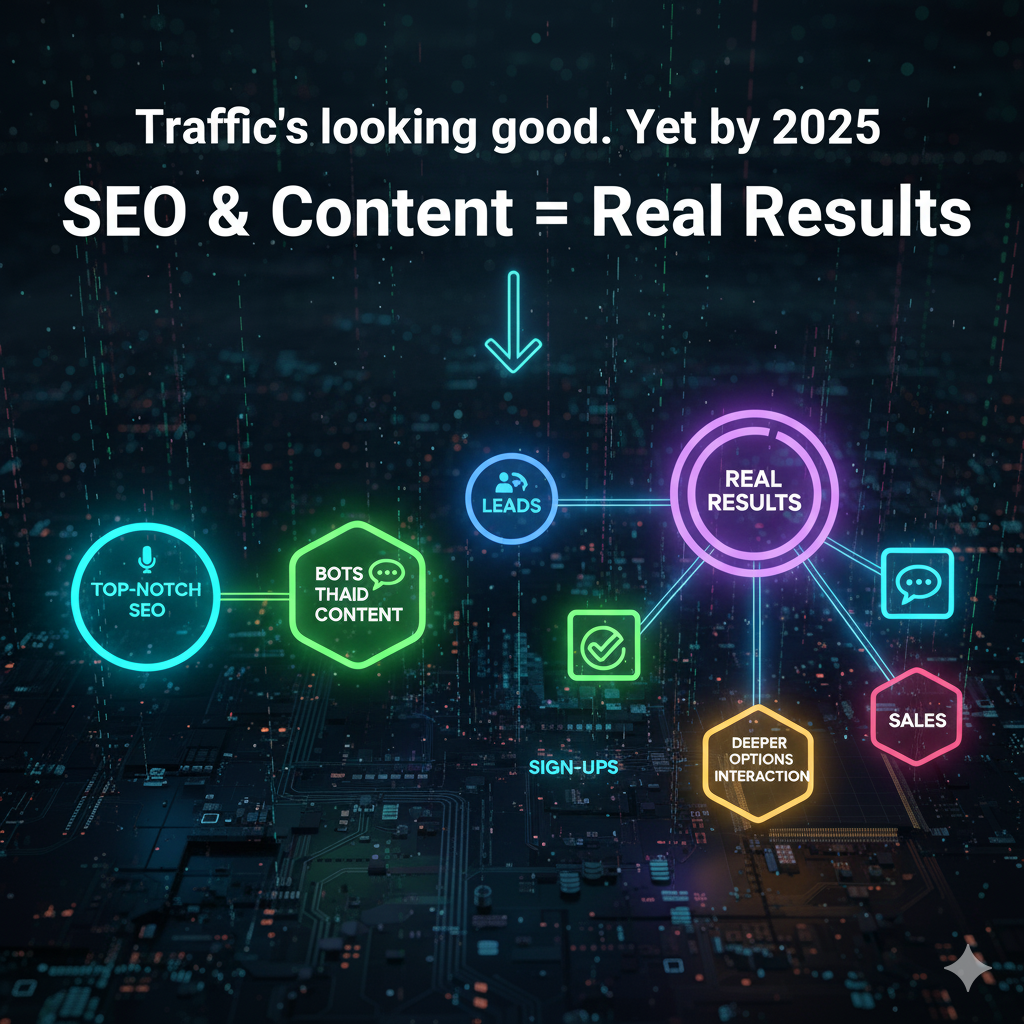
Traffic’s looking good. Yet by 2025, top-notch SEO mixed with solid content actually links to real results – think leads, sign-ups, deeper interaction, sales.
Your edge? Well, you get how marketing ops actually work – alongside real-world processes and CRM hooks. Leverage that insight to build content fitting full conversion paths, not only quick taps.
How to adapt
- Make clear calls-to-action in your content: e.g., “Download a no-code automation template”, “Try the CRM flow”, “Book a workflow audit”.
- Check how your content’s doing with tracking tools – don’t just count visits, look at how long folks stay, how far they scroll, or whether they tap those action buttons.
- When targeting strong intent terms, shape material that educates while nudging action.
8. Content metrics evolve — beyond pageviews
Why it matters
When search changes, things such as how long people stay on a page, how far they scroll, where your name pops up online, or clues about your business count way more than just visitor numbers.
Your content’s gotta deliver quickly, hook folks through real talk, then hold their attention right where it is.
How to adapt
- Try fun layouts – mix in charts, clickable bits, built-in apps or number crunchers.
- Link between your own pages so visitors stay on your site.
- Make it easy to skim – use titles, short points, images; stress main ideas.
- Keep an eye on stats like bounce rate along with how often people come back, plus what portion turns into customers – don’t get stuck watching only new visits.
9. Global, local & personalised content mix
Why it matters
While you’re based in Ludhiana, Punjab, India, international topics still work – yet local flair adds edge through homegrown case studies, region-specific know-how, or tools tailored for Indian agencies without coding demands.
On top of that, material must stretch worldwide since techniques like automation, search visibility, and smart tech are universal.
How to adapt
- Feature worldwide standards along with real cases from India – like local tools, costs, actual results.
- When doing local SEO – especially if you sell something – tweak your approach based on how people nearby talk and what they tend to search for.
- Real-life experiences from handling automation tasks for Indian customers can set you apart.
10. Your content blueprint for the future
Here’s my take on organizing your content schedule using these trends:
- A monthly deep-dive piece – over 2000 words – that tackles a single major topic, like the example shown here.
- Bi-weekly cluster articles (800-1200 words) diving deep into one sub-topic (e.g., “How to integrate AppSheet with Google Sheets for content workflow”, “Schema markup for HowTo articles explained”).
- Every week: quick posts, reshaped stuff – like a LinkedIn update here, a bit from the newsletter there, or a tiny video moment instead.
- Every three months: check which posts did best, tweak those, then reshare with “2026” tagged on.
Your words should pack your vibe – martech, automation, laced with some playful jab – and street-level know-how, along with straight-up lessons you can use.
Conclusion
In 2025, winning at SEO plus content planning goes to folks who blend smart frameworks, gut feel, and tech skills. Just putting stuff out there won’t cut it anymore – what matters is aiming each piece with intent, tuning it so bots get it while people still care, then weaving that material straight into your workflow tools.
Here’s what you do: choose one trend from the list, start working on it now – sketch out the structure, plan each step, set dates for publishing related posts. When search keeps shifting, your material could be the clear voice people actually notice.
Welcome to what’s next, where words blend with tools that drive action – while you, the tech-savvy marketer, get to watch it unfold up close.